Maternal Mental Health Month

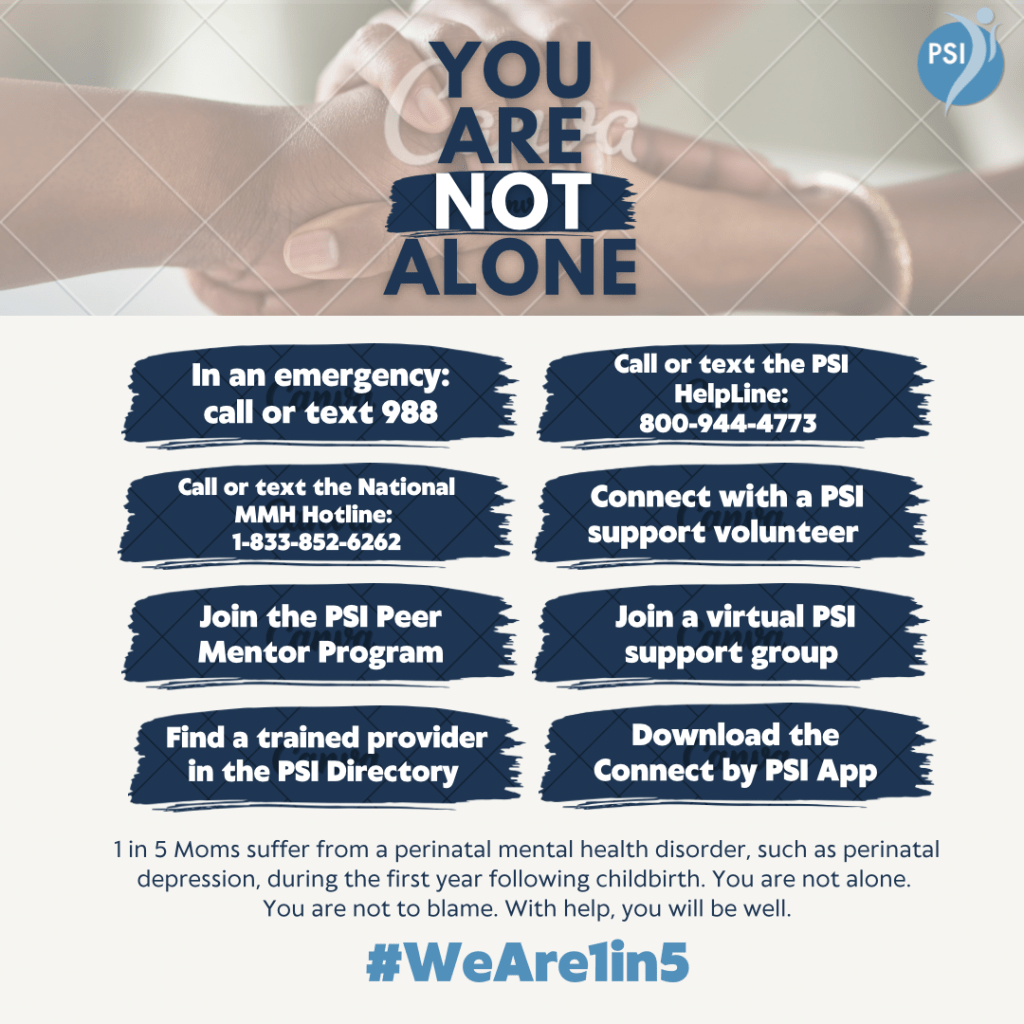
The perinatal period, which includes pregnancy and the first year after childbirth, is a time of immense physical, emotional, and psychological change. While many expectant and new parents experience joy and excitement, others may face overwhelming feelings of stress, anxiety, depression, or even trauma. Despite the prevalence of these challenges, perinatal mental health often remains an under-discussed and under-supported topic which leaves countless individuals to navigate their struggles in silence. I want you to know that you are not alone.

There are many barriers to accessing care the lack of accessible services and affordable perinatal mental health services. Many barriers exist, such as stigma surrounding mental health, limited availability of specialized care providers, and inadequate health coverage for mental health services. For many no one is checking in until 6 weeks after the birth of their child despite this being a critical time of change for the family. For individuals in marginalized communities, these barriers are often compounded by systemic inequities. The result is that many people who need help during this critical time are left without the tools or support they need.

One powerful way to address this gap is by sharing your personal stories of perinatal mental health struggles and recovery. Speaking openly about experiences can:

  1. Break the Stigma
    Sharing your story helps normalize conversations about perinatal mental health. When others hear that they are not alone in their struggles, it can reduce feelings of shame and isolation, this makes it easier for them to seek help.
  2. Foster Empathy and Understanding
    Personal stories provide insight into the lived realities of those affected by perinatal mental health challenges. This fosters greater empathy and encourages others—family, friends, and healthcare providers—to offer meaningful support.
  3. Encourage Systemic Change
    When people share their experiences publicly, it can shine a light on gaps in the healthcare system and inspire advocacy for better resources, policies, and funding for perinatal mental health care.
  4. Empower Others to Seek Help
    Hearing about someone else’s journey to recovery can give others the courage to take the first step toward seeking professional help, reaching out to loved ones, or joining support groups.
  5. Create a Sense of Community
    Sharing stories builds connections among those who have faced similar challenges. This sense of solidarity can be deeply healing and empowering for everyone involved.

While sharing your story can be incredibly impactful, it’s also a deeply personal decision. If you’re considering opening up about your experience, it’s essential to do so in a way that feels safe and comfortable for you. Whether through a blog post, support group, or conversation with a trusted friend, your voice has the power to inspire change and offer hope to others navigating similar struggles. Also know if you are not ready or it is too raw and unprocessed right now that is also ok and it’s important to respect that. If you need help please reach out to Postpartum Support International at https://postpartum.net/ or you can Text “Help” to 800-944-4773 (EN) or Text en Español: 971-203-7773 Please know that you are not alone and there is support to offer you a lifeline as you navigate coming out of the darkness.

Together, by raising awareness and breaking the silence, we can work toward a world where every parent has the mental health support they need to thrive. Where no one is left alone to feel like there is no way out of the darkness, together we can climb to the light.

Throughout the month of May I will be sharing more information, resources and my own journey with perinatal mental health and some of the struggles I faced. I hope that you will join me in celebrating Maternal Mental Health Month. Together we can support and build a better future.

Searching for Luck

As I reflect on luck and parenting after a few very challenging years, some thoughts come to mind. Luck is often seen as an unpredictable force that influences the course of our lives, but it can also be nurtured by that environment we create, this is especially true in the realm of parenting. Positive parenting plays a crucial role in shaping how our children perceive luck and their ability to leverage it for personal and social growth. When we as parents foster a supportive, encouraging, and emotionally secure environment, we are helping our children develop the skills and a mindset that will allow them recognize and seize opportunities. So luck is not solely a random occurrence; it can also be the result of preparedness meeting opportunity. When we equip our children with emotional intelligence, problem-solving skills, and a growth mindset they are better positioned to “create their own luck.” Positive parenting contributes to this by nurturing traits such as resilience, curiosity, and confidence, enabling our children to navigate life’s uncertainties with optimism and determination. At times life is messy and parenting is messy, so much is out of our control and when we embrace the mess and work to create a space that emphasizes warmth, structure, and encouragement. This approach builds a stable foundation that fosters resilience, optimism, confidence, curiosity and gratitude even in the face of difficult and challenging circumstances.

Navigating Heartache and Hope: Parenting Through a Spouse’s Diagnosis of Heart Failure and DSP and a Medically Complex Baby

Hello there it has been quite a while since I sat down to write and was able to find the words. There are moments in life when everything changes — not slowly, but all at once. For me, that moment came with a diagnosis: my spouse was diagnosed with DSP gene and now heart failure. As if parenting five young children (all under 9) wasn’t already a full-time, round-the-clock commitment, we also adding learning to navigate life with a medically complex baby whose needs since her pregnancy have been, complex, constant, and consuming. She is a joy to our family and bring us much happiness and we are so thankful that she chose us to be her family.

This isn’t the life we planned — but it’s the one we’re living, and somehow, through the chaos, we’re finding our way. I am hopeful that I will be able to begin posting more frequently, as I have always found that putting my words down has been helpful in navigating the complex emotions that come with life’s unexpected challenges. I am also hopeful that sharing some of my struggles and the little wins that come with this life that I can help others.

Beautiful Mess Play Academy

Today my family embarked on a new adventure homeschooling! I have always wanted to homeschool but did not plan to start yet with graduate school, a traineeship and a baby, toddler and TKer it seemed too much. The pandemic changed a lot of things the ability for in person learning was lost. With my spouse teleworking and homeschooling being flexible this was the perfect time to begin the journey. We are very excited and hoping to find ways to make learning fun and play filled.

Pandemic life with tiny humans

The days are long but the weeks fly by a saying I used to use for being underway on ships when active duty but it also applies so well to pandemic life with tiny humans.

No one knows what we are doing and it’s all new uncharted territory and what works for my family may very likely not work for other families like most things when it comes to raising tiny humans they all are so different and have different needs. My oldest is very social he loves everyone and is really struggling being without the interaction of friends and strangers. For me I understand how he is feeling as I am also quite social and I am finding I am also missing the social connections so much. My middle one seems to miss Costco the most as she is not very social and prefers her family to strangers.

There have been a few good resources I have seen that can help our children with understanding this pandemic and the changes it has brought about.

https://www.cnn.com/videos/health/2020/04/25/entire-cnn-sesame-street-coronavirus-town-hall-part-1-vpx.cnn

This website has some good resources

https://www.aacap.org/AACAP/Families_and_Youth/Resource_Libraries/covid-19/resources_helping_kids_parents_cope.aspx

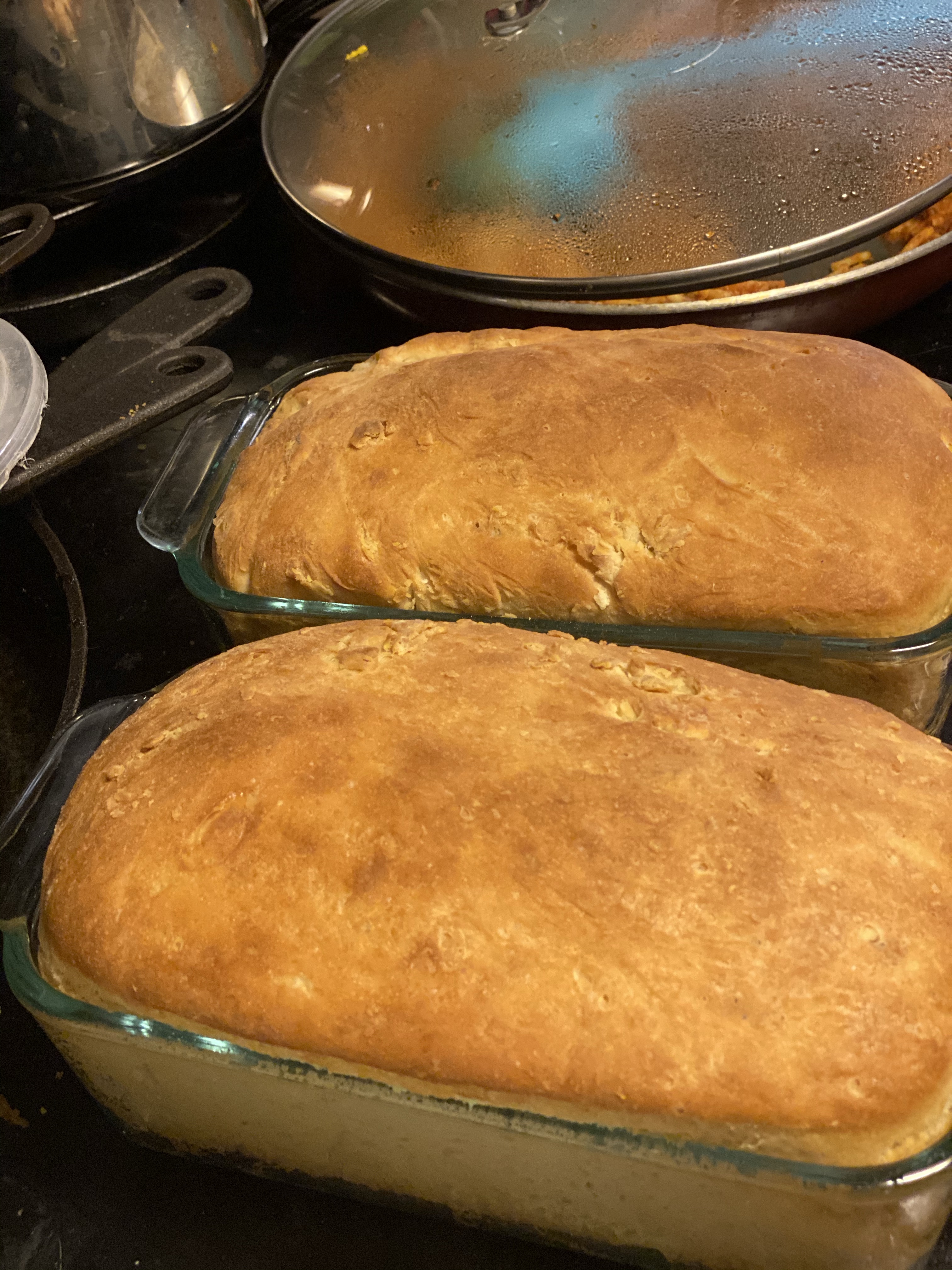
Pandemic Bread

We ran out of the store bought bread quickly and my kids wanted jellyfish sandwiches (you may call them Peanut-butter & Jelly) so it was time to make a loaf of bread so they can have some.

Ingredients

4 and 1/2 teaspoons of yeast (if you do not have yeast but do have sourdough starter you can add a cup of wet starter and then decrease flour by a cup and decrease water by a half cup)

¾cup+ 2⅔ cups warm water(divided)

¼cup granulated sugar or honey

1 teaspoon of salt

3 tablespoons of butter, cubed, at room temperature

9 to 10 cups of -purpose flour3tablespoonsunsalted butter(melted, for brushing)

DIRECTIONS:

  1. In the bowl of a mixer, stir to dissolve the yeast in ¾ cup of the warm water, and let sit for 5 minutes. Add the remaining 2⅔ cups water, sugar, salt, room temperature butter, and 5 cups of the flour and stir to combine.
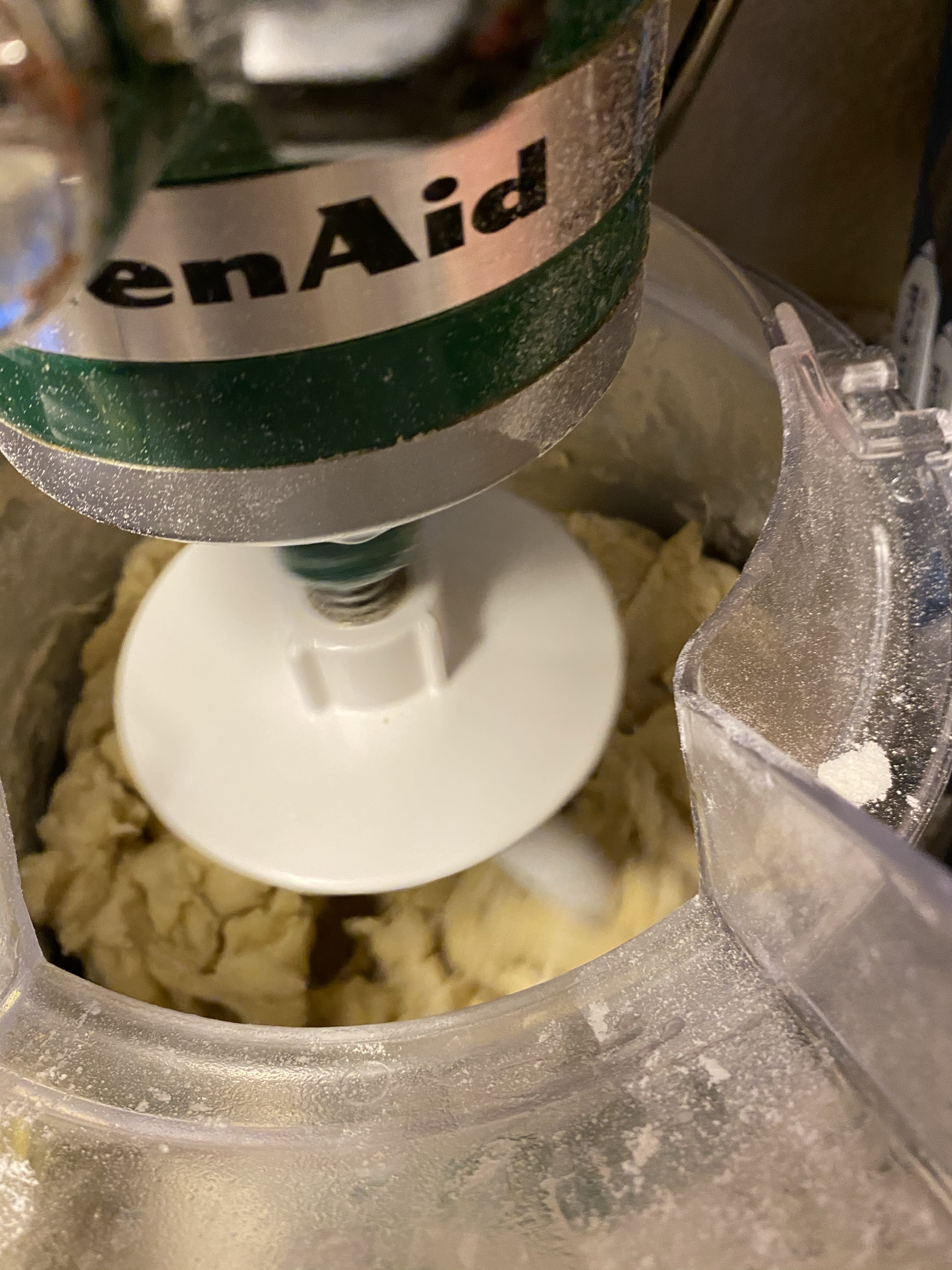
  2. Using a dough hook, mix on low speed and gradually add the remaining flour until the dough is soft and tacky, but not sticky (you may not need to use all of the flour). Continue to knead until a soft ball of dough forms and clears the sides of the bowl, about 6 to 10 minutes.
  3. Place the dough in a lightly greased bowl and turn it over so it is completely coated. Cover with plastic wrap or a tea towel then set in a draft-free place to rise until doubled in size, about 45 minutes to 1 hour.
  4. Turn the dough out onto a clean, lightly floured surface. Gently press it all over to remove any air pockets. Divide the dough in two and, working with one piece at a time, gently pat it into a 9×12-inch rectangle. Roll up the rectangle, starting on the short end, into a very tight cylinder. Pinch to seal the seams and the ends, tuck the ends of the roll until the bread, and place into greased 9 inch loaf pans. Cover the loaves loosely and place in a draft-free area until doubled in size, 30 to 45 minutes.
  5. Position an oven rack on the lowest setting and preheat the oven to 400 degrees F.
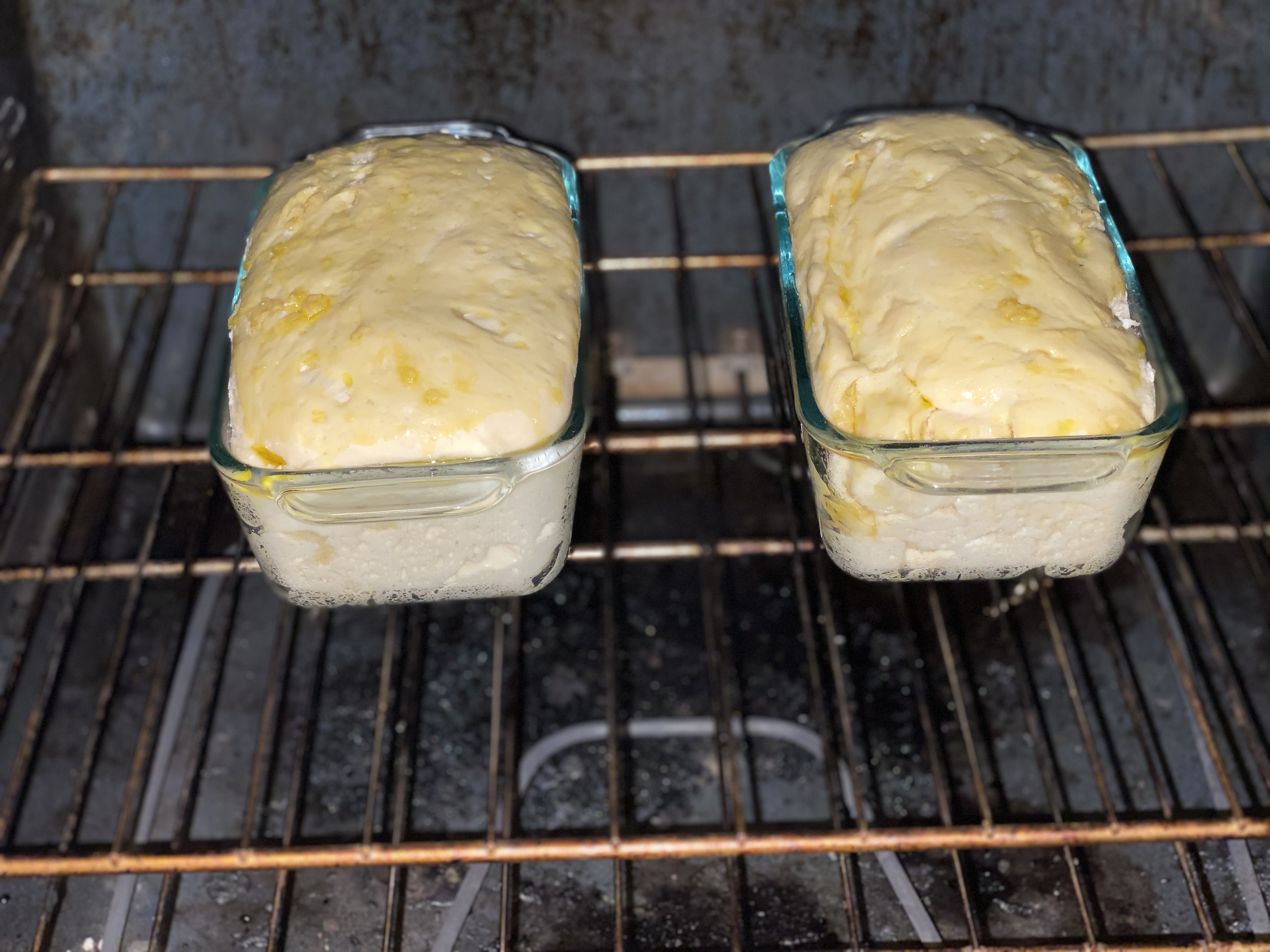
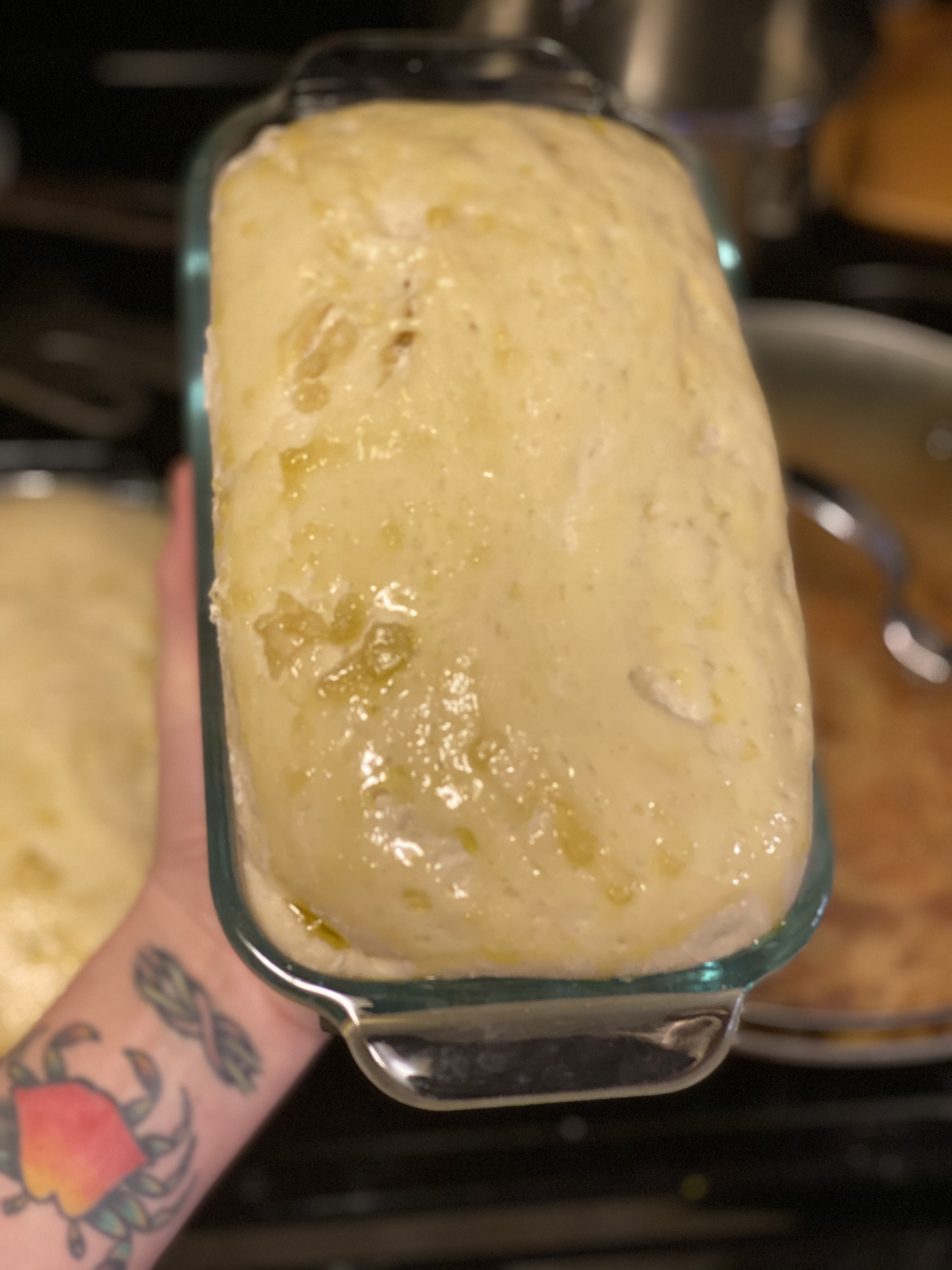
  6. Brush the loaves with some of the melted butter. Bake the loaves for 30 to 35 minutes, rotating halfway through, until golden brown
  7. Remove from the oven and immediately brush with more of the melted butter. Allow to cool for 10 minutes, then remove from the pans and cool completely before slicing. The bread can be stored in an airtight bread bag or wrapped tightly in plastic wrap at room temperature for up to 4 days. It can also be frozen for up to 1 month.

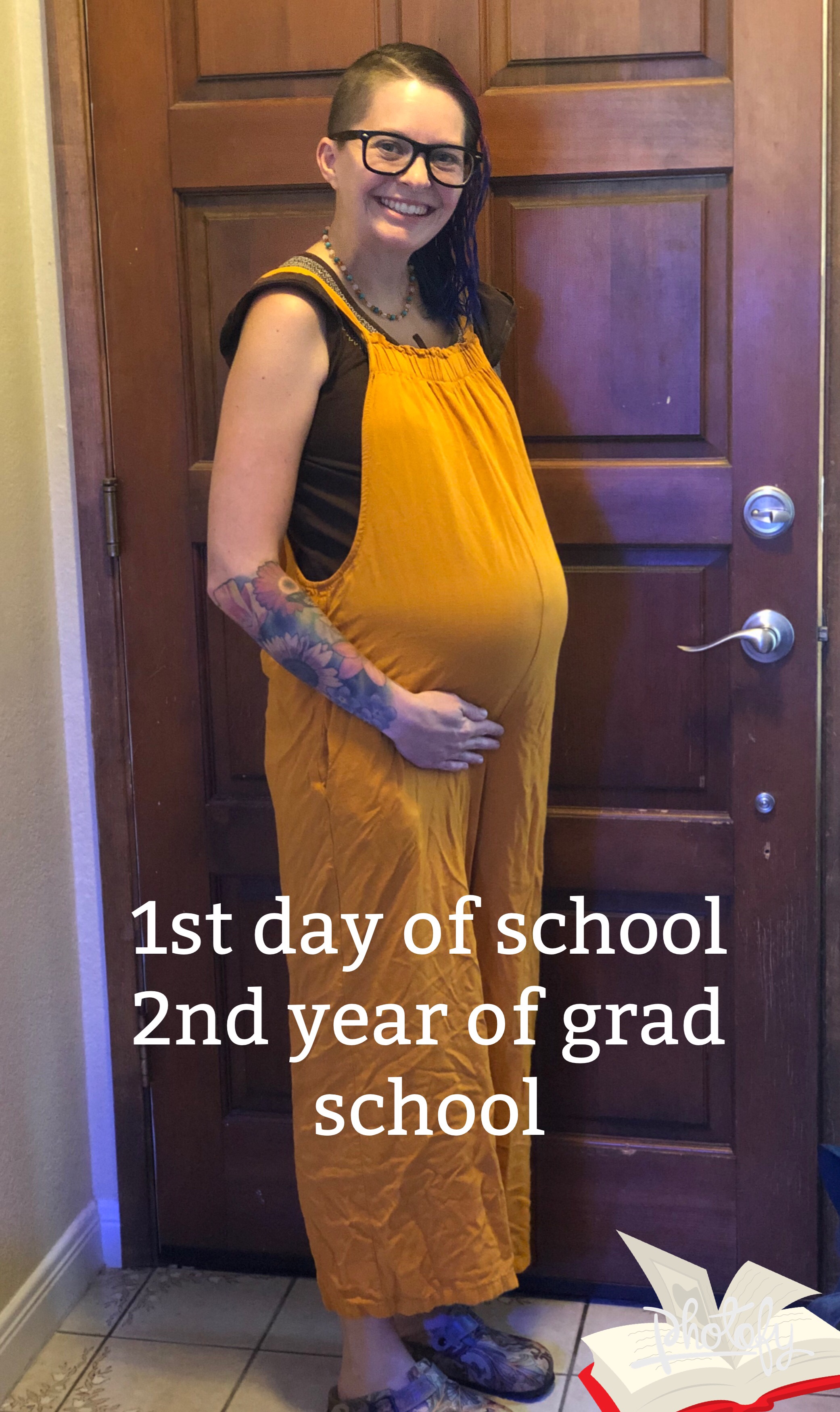
First day of school, Second year of Grad School

I did it I made it one year through graduate school! The end was a hard finish and I am still working out some things for my last class since I had emergency surgery during that class.

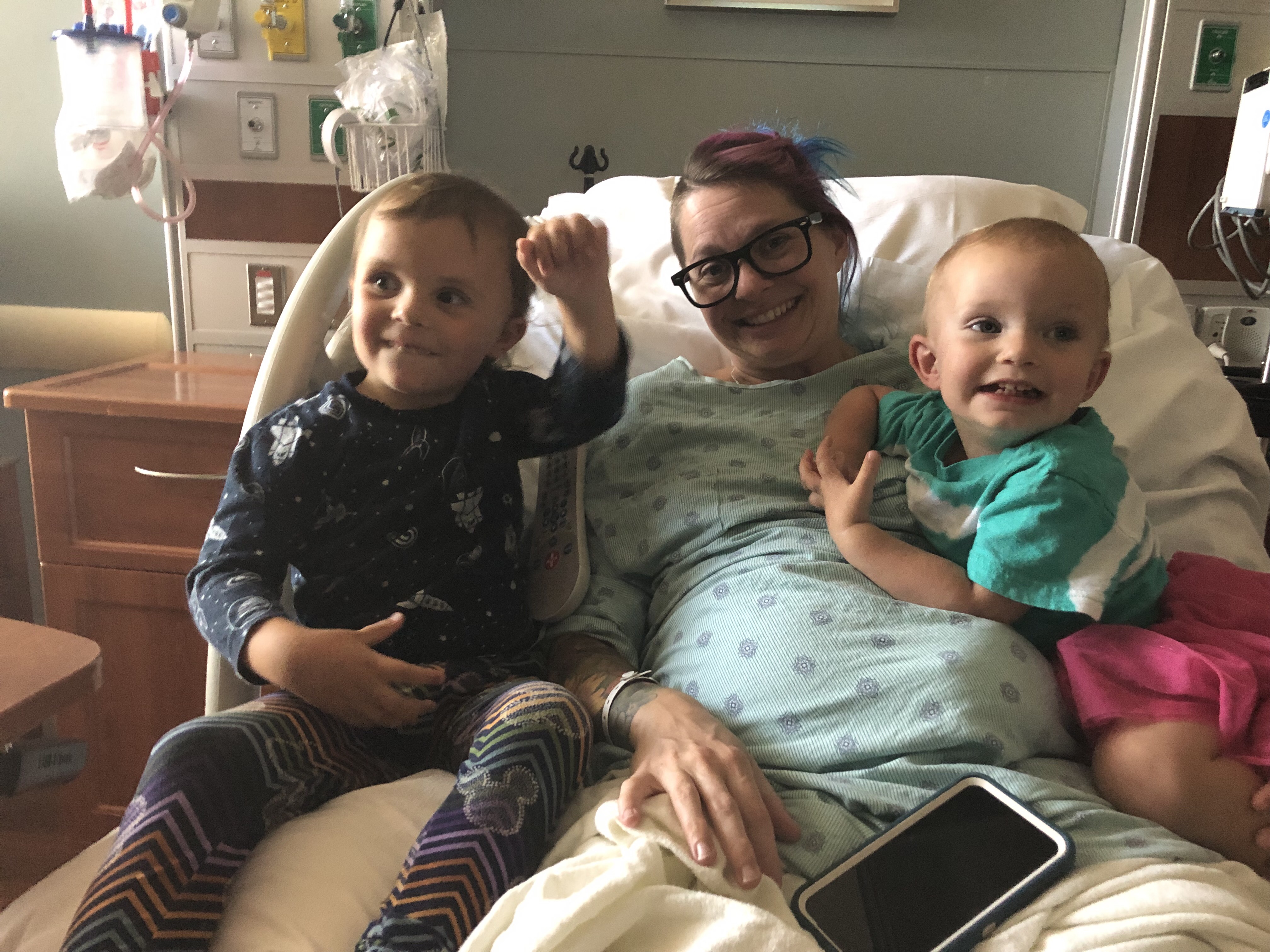
I am starting this school year 23 weeks pregnant with a 3.5 year old and a 22 month old, and recovering from emergency surgery! My 22 month old is about it start weekly speech therapy in addition to her weekly play visits that she has, so we will be busy you could say. I have this year to prepare for traineeship that I will start next August 😳 This journey is going much quicker than I thought it would.

When nothing is going right

We recently had a really tough few weeks. It started with my 21 month old getting a super high fever while I was in class, which for her is kind of normal so at first we thought nothing of it. But later that day once I was home from class it got up to almost 105 which is when you start to worry she was also very cranky and did not want to eat or drink which is not within her normal for when she has her fevers. We looked in her throat and it was filled with sores we took her in to the to the pediatrician and they confirmed that she had Herpangina is an acute viral illness in children. The symptoms of it are Blister-like bumps in the mouth, often in the back of the throat and on the roof of the mouth

  • Headache

  • Sudden fever

  • High fever, sometimes up to 106°F (41°C)

  • Pain in the mouth or throat

  • Drooling

  • Decrease in appetite

  • Neck pain

It is much like Hand Foot and Mouth the very awful and common illness of young children. Herpangina can last up to 7 days and is very contagious and dangerous to pregnant women as it can cause low birth weight and some other dangerous side effects for the unborn baby. Being 20 weeks pregnant this was a scary thought.

As she was coming down with this awful sickness I began to experience some bad pains in my right side that were not going away or getting better no matter what I tried. My husband came down with Herpangina so they were both sick with high fevers and awful sores in their throats.

I was on the internet looking at causes of sharp pain on the right side some common ones are gas, constipation, and round ligament pains. I waited to pass gas to be sure that was not it tried finding a comfortable position to be in that would not still hurt but nothing was working and I was beginning to worry it was Something that was a warning sign of something more serious and that I needed to go in to the Emergency Department and have that ruled out.

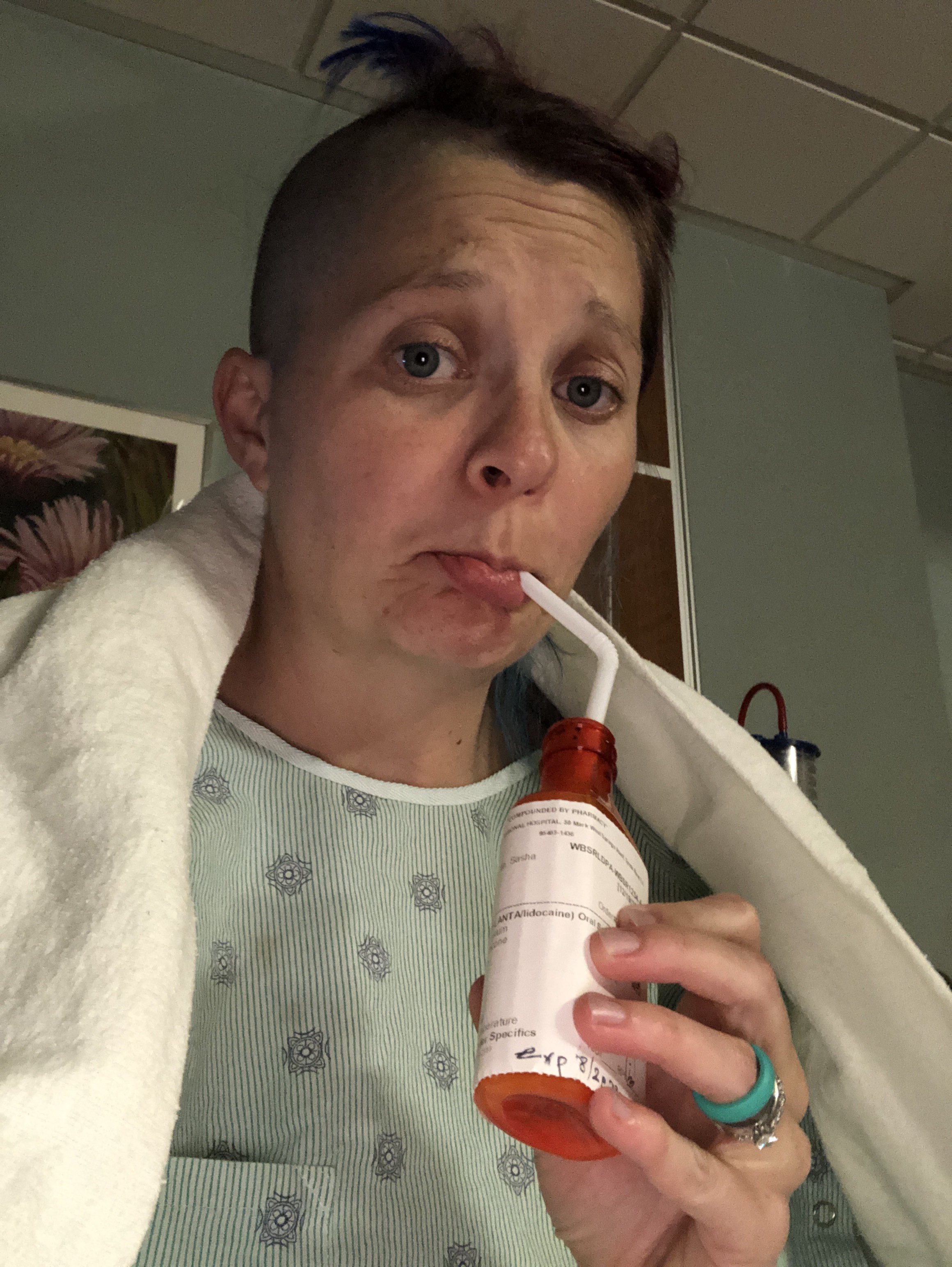
GI cocktail

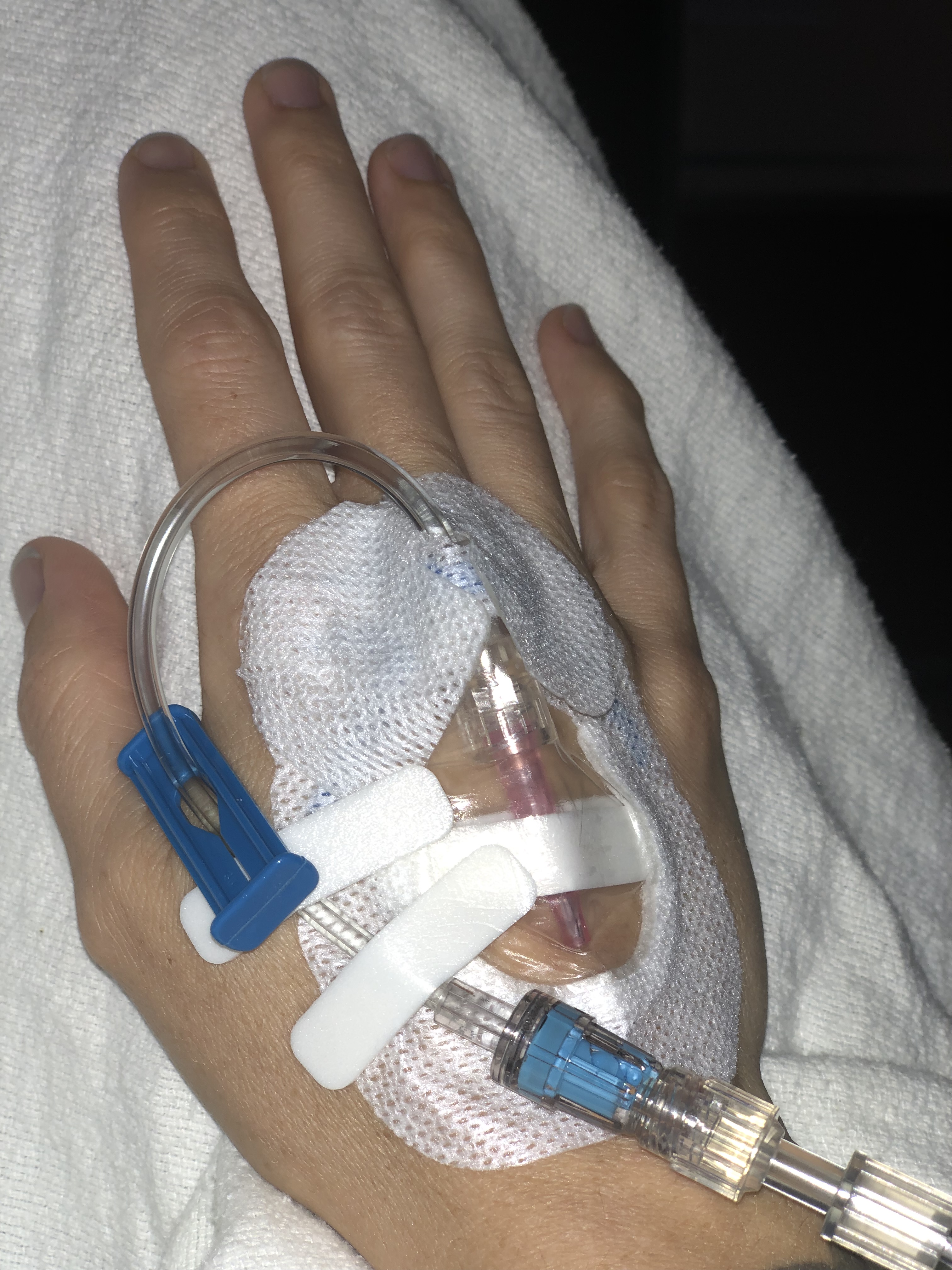
IV for antibiotics

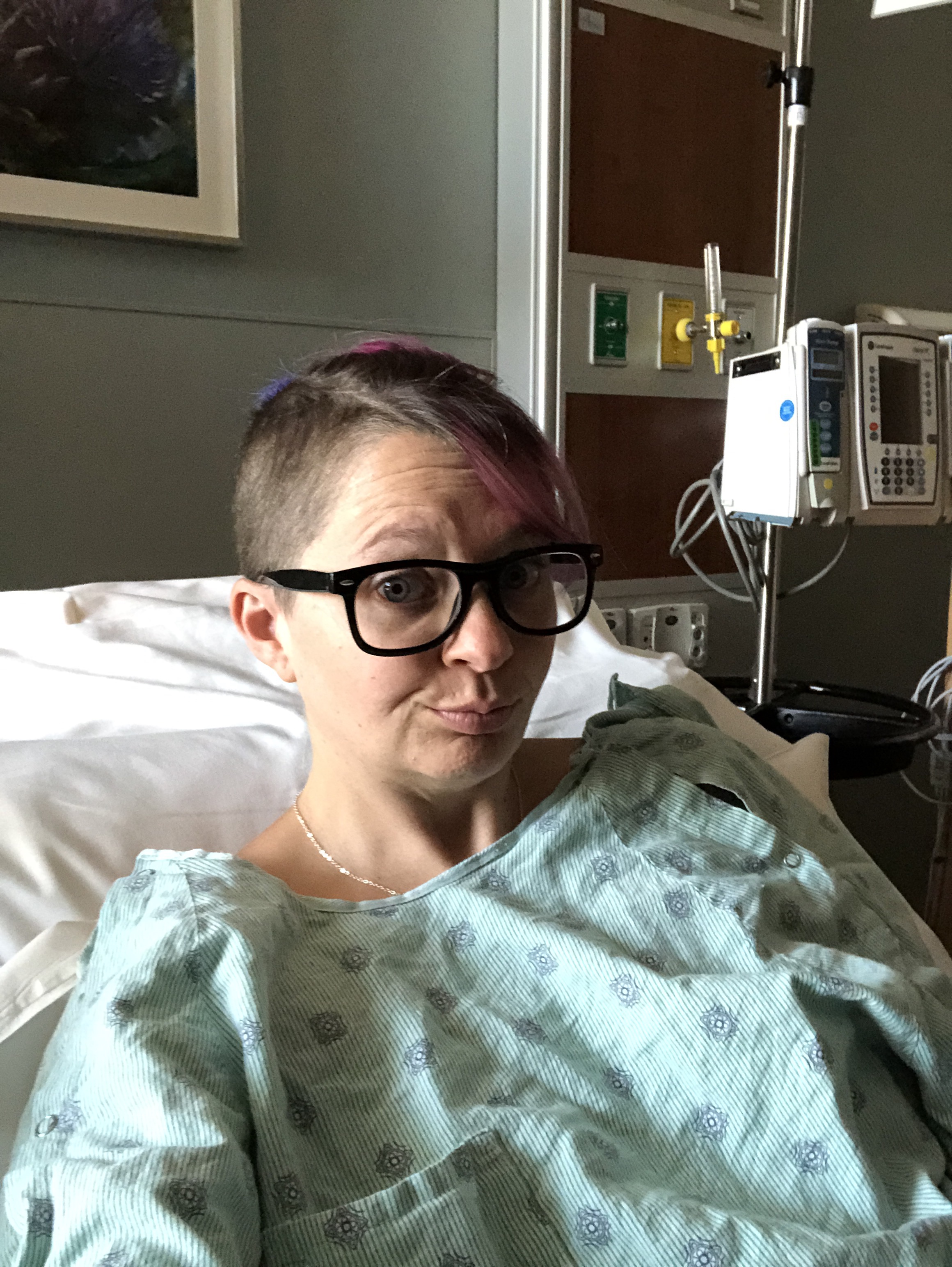
Day of my presentation trying to not be in pain

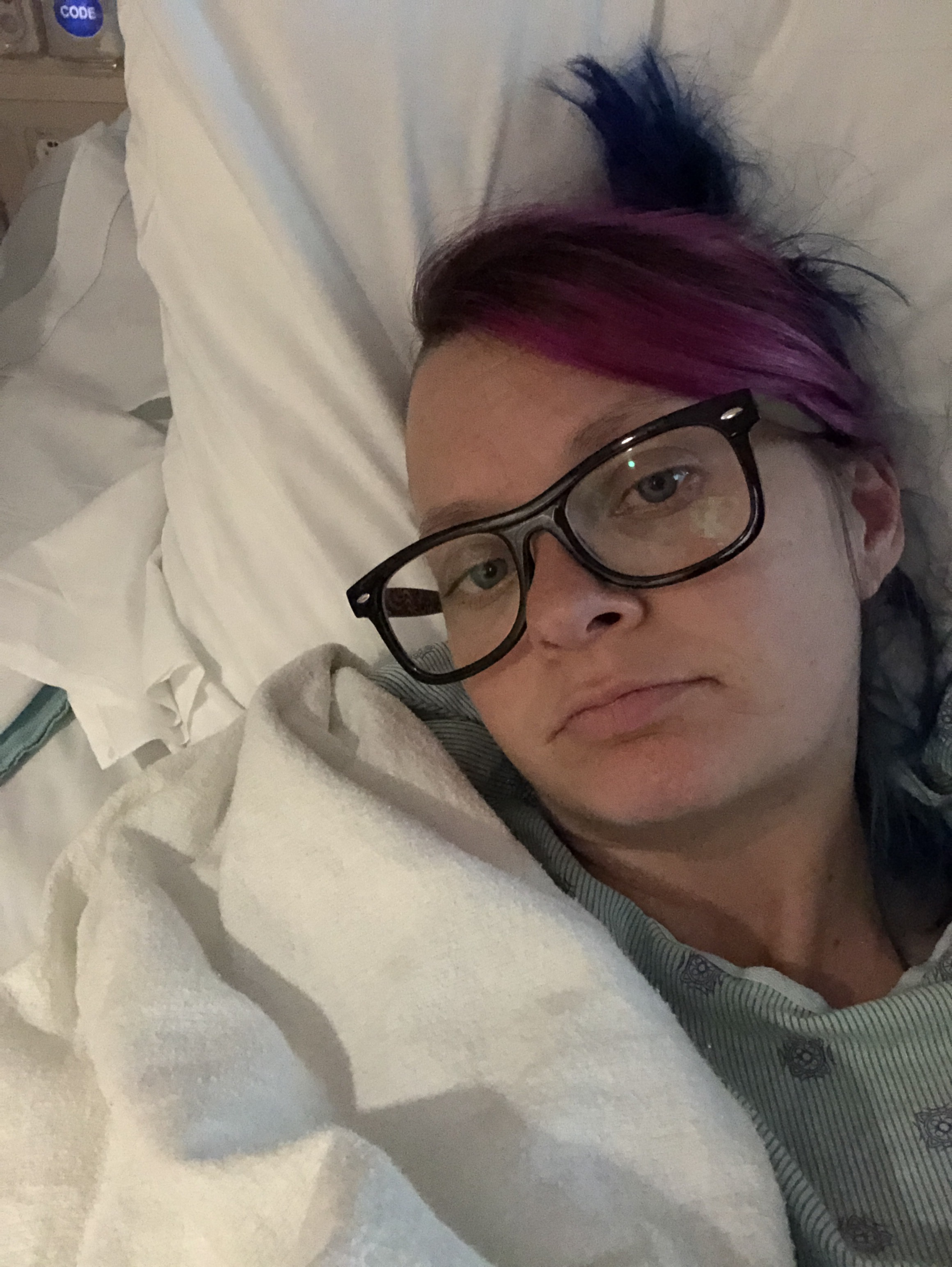
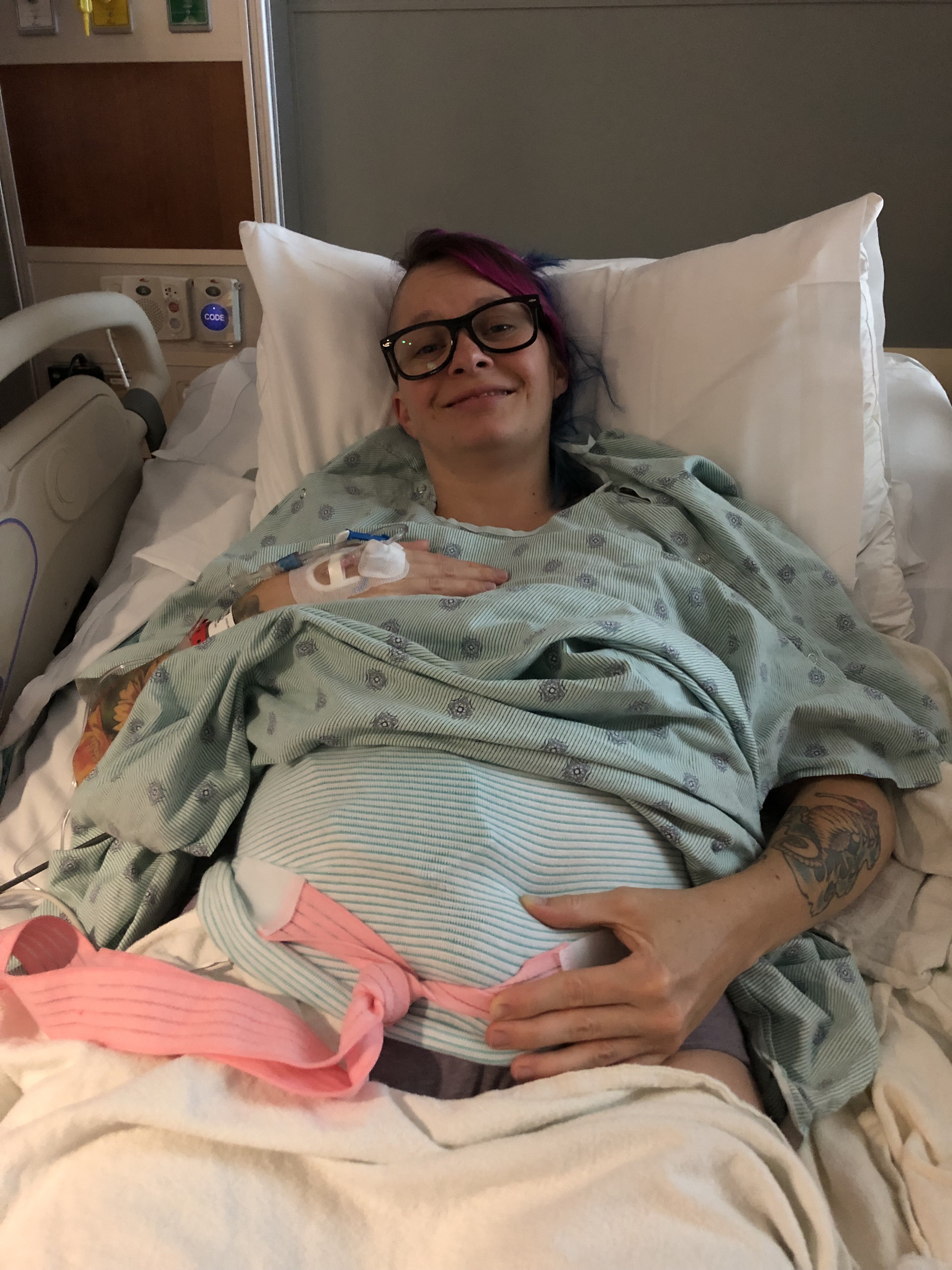
We decided on a trip to the hospital. Being that I was 20 weeks pregnant I got a trip from the ED to Labor and Delivery to be checked out. They ran some labs and said I looked fine that it was likely some muscle or ligament pains to go w and come back if it got worse. I had yet another night or no sleep I could not find a comfortable position and laying down at all was more painful than sitting up but it all hurt I was miserable and frustrated that I felt like this but was told I was fine. The next morning we went back to the emergency department then labor and delivery. They ran the tests again and said they looked fine they ordered an ultrasound and a anatomy scan of the baby. Both checked out well so I was told to go home and get a heating pad and do some stretches for a sore muscle maybe take some Tylenol. I questioned this and reminded the doctor I had gotten zero sleep was in pain more when I laid down and that nothing helped and stretching made it worse. I was even more frustrated and upset that something seemed wrong but I was being told I did not know my body. This is my third pregnancy and I had never had a pain like this I had experienced right ligament pains and bad sciatica that made walking difficult but nothing like this. I had a big project due for grad school so I focused on that and decided if the pain was the same not worse I must be ok because they said I was. I powered through 2 more days and got my presentation together. I had class that afternoon and evening and needed to present but first I had a follow up with the OB from being hospitalized. She said saw me looked over the labs again and said everything looks ok but if the pain doesn’t get better or gets worse to go back in. Shortly after leaving the office I began to feel not well the pain got a bit worse and I began to get nauseous but I had to present so I continued on to class. My partner and I were presenting last so it took a while before it was our turn and we had a dinner break first as the evening went on I began to feel worse I was not able to eat I was too nauseous and began to feel like I may need to have a bowel movement but when I tried nothing. I presented and then was having a hard time focusing and knew I needed to leave and go home so I left class early. I got home and my husband said I did not look well I decided to try to lay down and see if I felt better I could not lay down and the pain was too much I had to go back to the Emergency Department. Since my husband and daughter were still getting over their cold I had him put me in a wheelchair and leave me there to be checked in and checked out. I sat alone and worried I knew something was wrong and was so worried they were going to tell me again that nothing was wrong. I was taken to Labor and Delivery they came in and said they would be running all the tests again and doing another ultrasound to see how things were going. I was given a GI Cocktail one of the only cocktails you can enjoy when pregnant and it actually was really yummy I am guessing because of how ill I was. More bloodwork results and another ultrasound that was inconclusive they decided it was time for an MRI and the surgeons to be notified Incase I needed to have surgery. The MRI was long and I was so uncomfortable then I was wheeled back to my room to wait for the results in came the doctor to let me know it was my appendix and I would need emergency surgery and the surgeon and anesthesiologist would be in soon to talk to me about it. I called my husband and told him to come right away to the hospital that it was indeed my appendix and I was having surgery soon. It was now early morning on Friday and things moved quickly yet slowly I had so many worries and concerns bouncing around in my mind. Would baby be ok? What if something went wrong? How hard recovery would be? I tried it calm myself and told baby that we were brave and strong and too many people needed us so we had to get through this successfully. They wheeled me back my husband and daughter walked me to the door of the hallway to the OR and off I went. The anesthesiologist and the nurses were all amazing and kind. The surgery went well they were able to do it laparoscopic which was the outcome they hoped for. Baby and I were doing well.

One of the biggest things this experience has taught me is that we know our bodies and if the medical providers are not listening to us we must advocate and make them hear us and our concerns. They almost did not do the MRI and my appendix was so close to rupturing that it would have ruptured if they had not done the MRI and discovered it and the outcome would likely have been catastrophic.

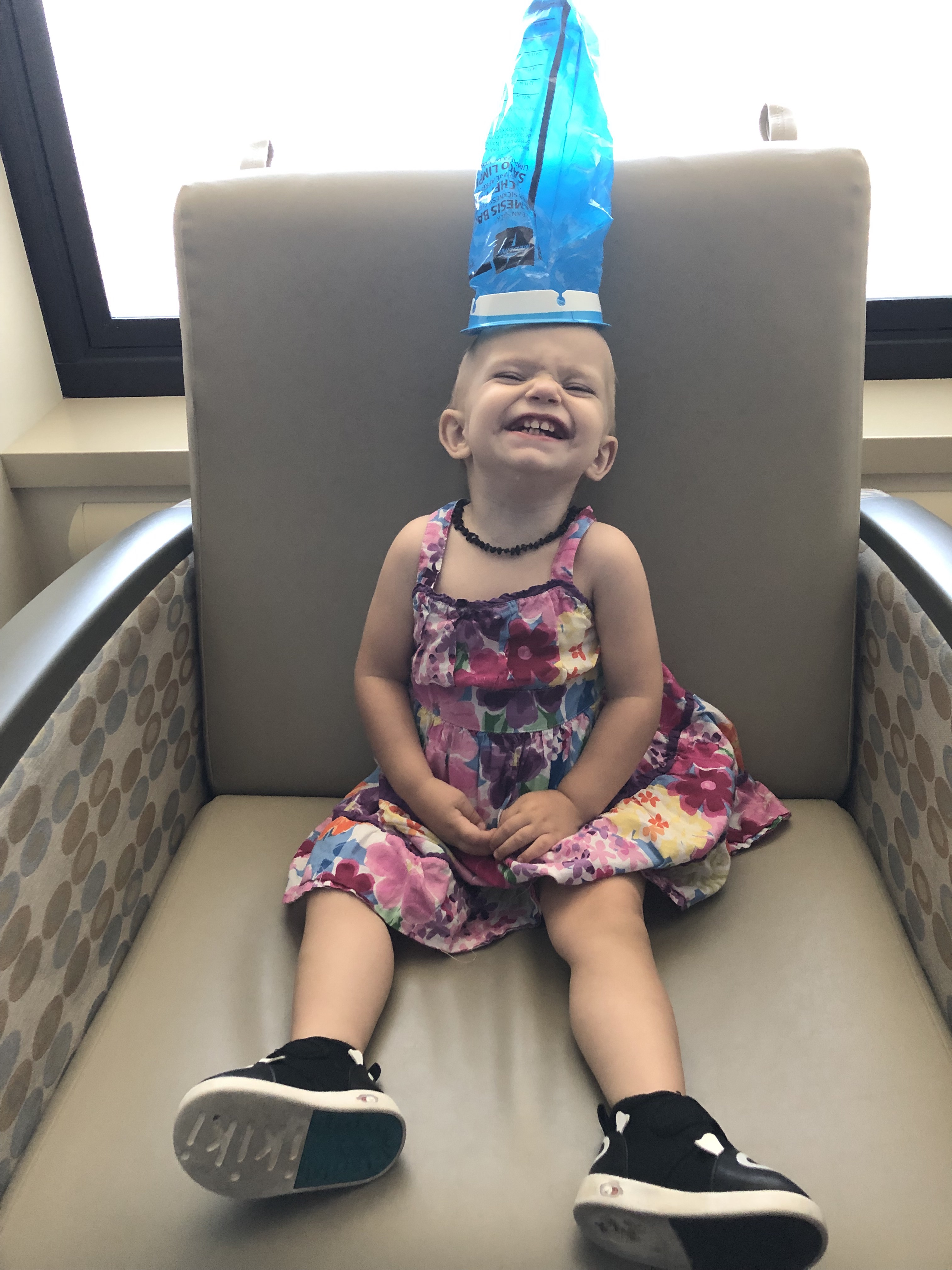
Puke bag hat

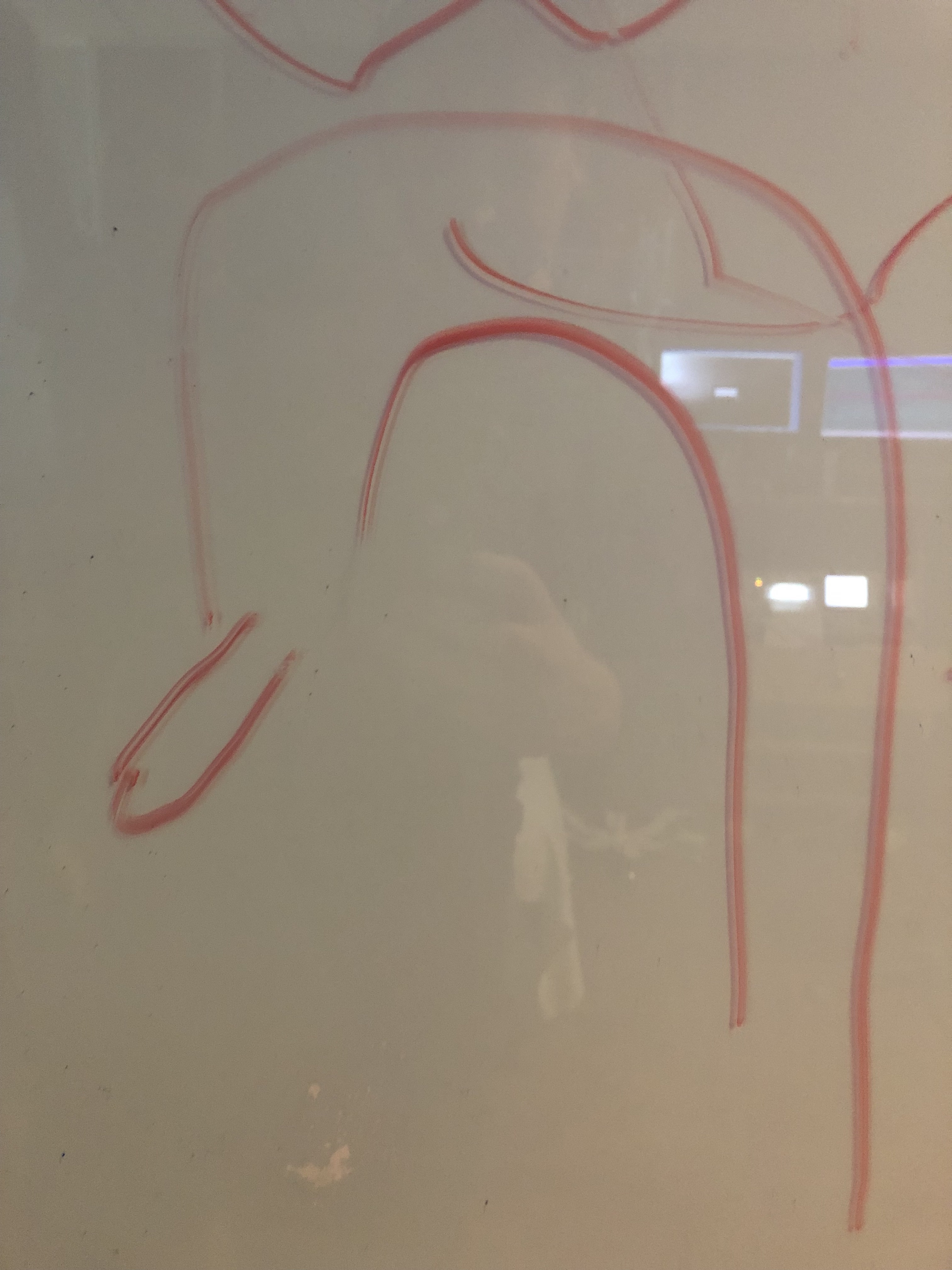
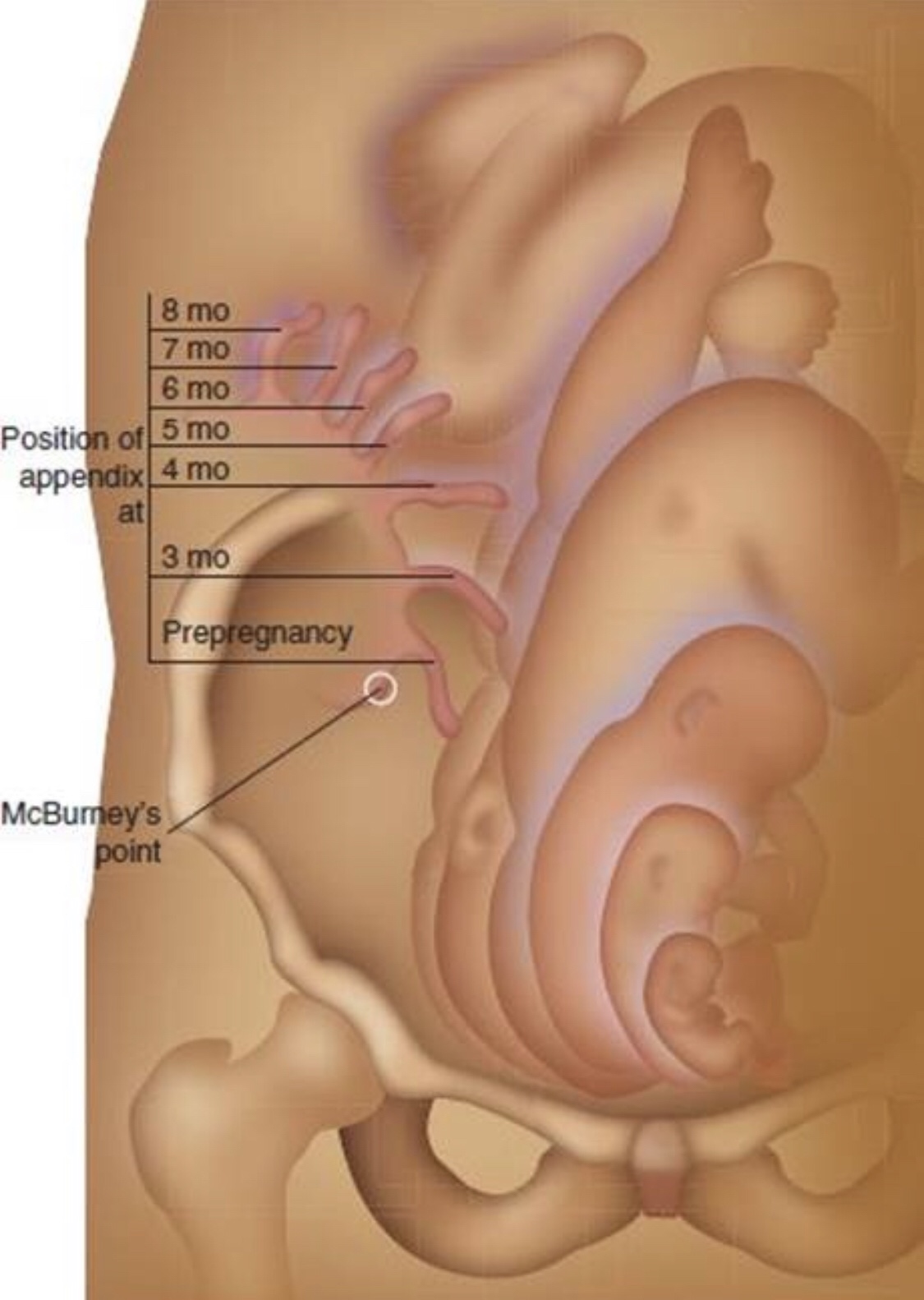
Surgeons drawing of an appendix

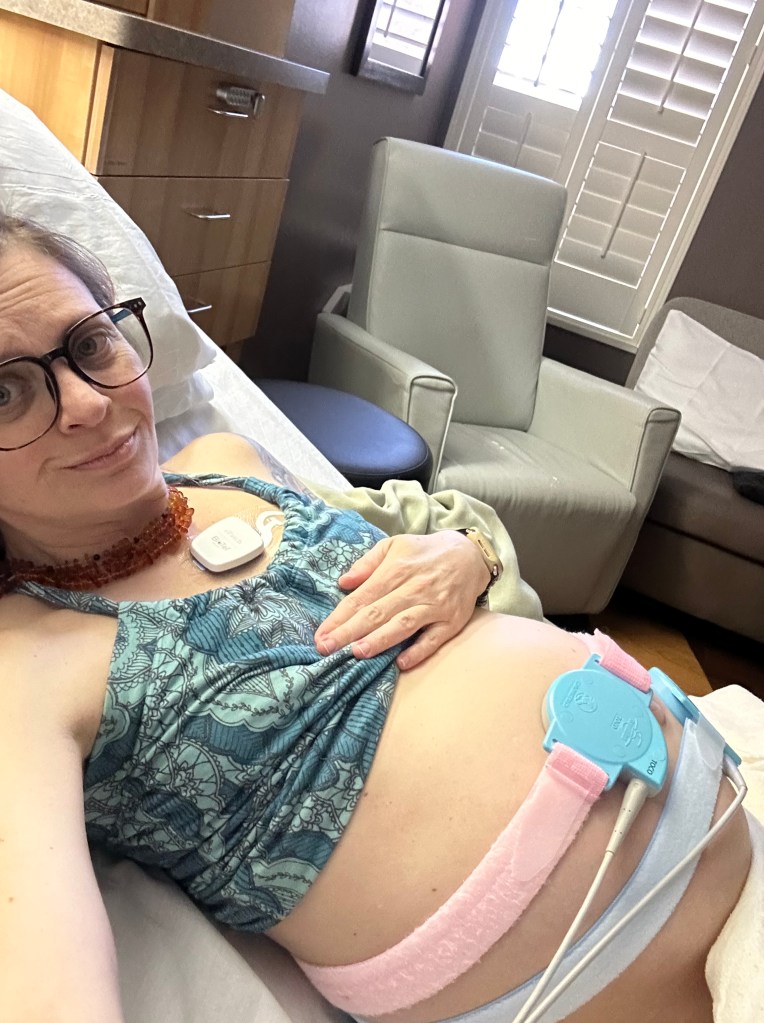
Monitoring baby

World Breastfeeding Week 2019

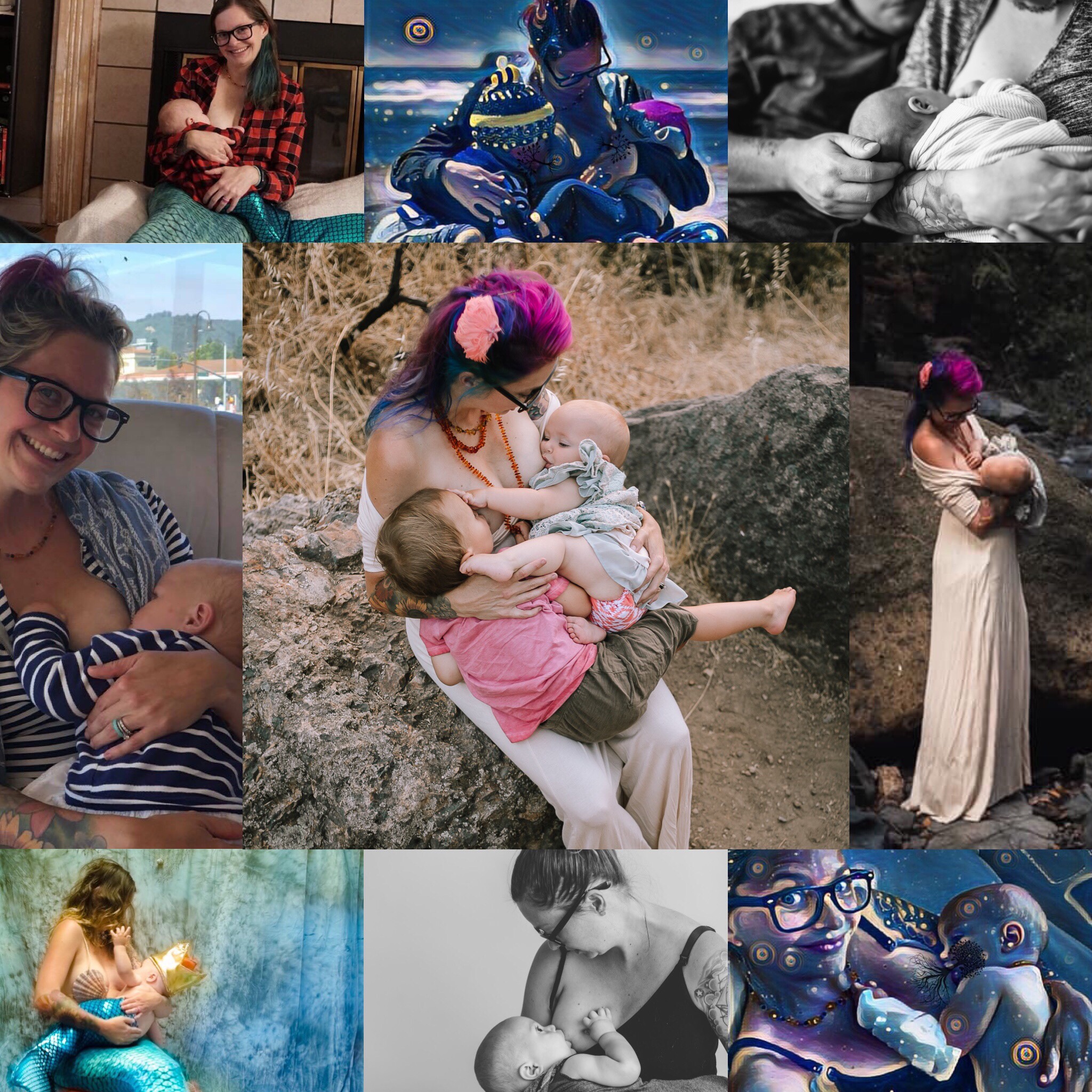
Today is the start of World Breastfeeding Week 2019! Breastfeeding is a beautiful journey that often has difficult patches having support is so beneficial to making sure that you are able to succeed in your breastfeeding journey.

As of today I been breastfeeding for 3 years and

8 months as of today and I have been tandem nursing for 1 year and 9 months and 20 days!

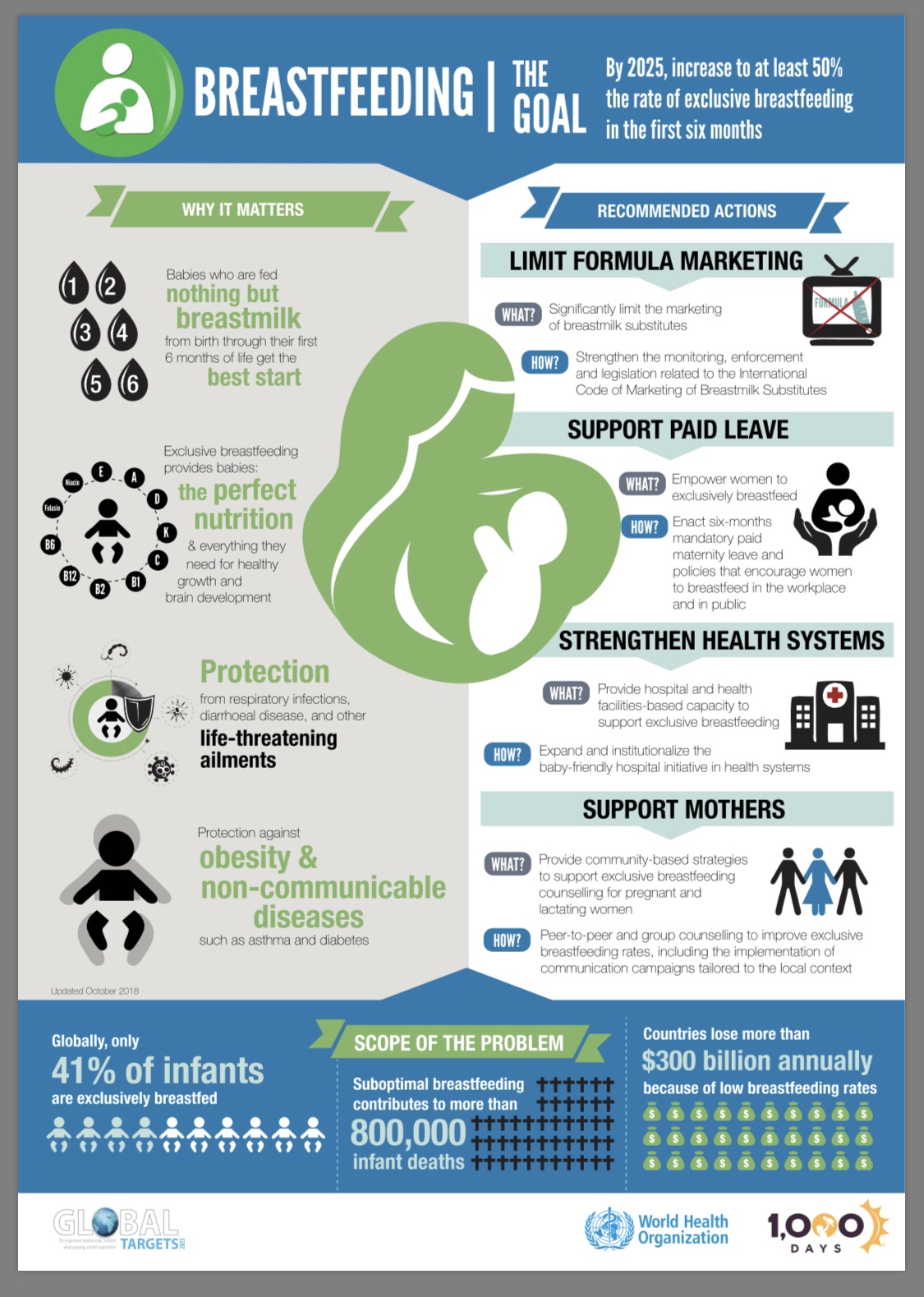
Optimal breastfeeding is vital to the lifelong good health and wellbeing of women and children.

WHO and UNICEF recommend:

  • Early initiation of breastfeeding within 1 hour of birth.
  • Exclusive breastfeeding for the first 6 months of life.
  • Continued breastfeeding up to 2 years of age or beyond, with introduction of nutritionally adequate and safe complementary (solid) foods beginning at 6 months. http://waba.org.my

State Breastfeeding Laws

State Breastfeeding Laws

It is important to know what laws protect you and your rights. With World Breastfeeding Week coming up I wanted to share this great list of states and their laws that protect breastfeeding. It was not until last year that women were protected by law to be allowed to breastfeed in pubic in all 50 states Idaho and Utah were the last ones and there was still some resistance.

  • All fifty states, the District of Columbia, Puerto Rico and the Virgin Islands have laws that specifically allow women to breastfeed in any public or private location.
  • Thirty states, the District of Columbia, Puerto Rico and the Virgin Islands exempt breastfeeding from public indecency laws. (Alaska, Arizona, Arkansas, Florida, Idaho, Illinois,Kentucky, Louisiana, Massachusetts, Michigan, Minnesota, Mississippi, Missouri, Montana, Nevada, New Hampshire, New York, North Carolina, North Dakota, Oklahoma, Pennsylvania, Rhode Island, South Carolina, South Dakota, Tennessee, Utah, Virginia, Washington, Wisconsin and Wyoming.)
  • Twenty-nine states, the District of Columbia and Puerto Rico have laws related to breastfeeding in the workplace. (Arkansas, California, Colorado, Connecticut, Delaware, Georgia, Hawaii, Illinois, Indiana, Louisiana, Maine, Minnesota, Mississippi, Montana, New Hampshire, New Jersey, New Mexico New York, North Dakota, Oklahoma, Oregon, Rhode Island, Tennessee, Texas, Utah, Vermont, Virginia, Washington and Wyoming.)
  • Seventeen states and Puerto Rico exempt breastfeeding mothers from jury duty or allow jury service to be postponed. (California, Connecticut, Idaho, Illinois, Iowa, Kansas, Kentucky, Michigan, Mississippi, Missouri, Montana, Nebraska, Oklahoma, Oregon, South Dakota, Utah and Virginia.)
  • Six states and Puerto Rico have implemented or encouraged the development of a breastfeeding awareness education campaign. (California, Illinois, Minnesota, Missouri, Mississippi and Vermont.)

Several states have unique laws related to breastfeeding. For instance,

  • Puerto Rico requires shopping malls, airports, public service government centers and other select locations to have accessible areas designed for breastfeeding and diaper changing that are not bathrooms. Louisiana’slaw requires state building to provide suitable areas for breastfeeding and lactation.
  • At least three states have laws related to child care facilities and breastfeeding. Louisianaprohibits any child care facility from discriminating against breastfed babies. Mississippi requires licensed child care facilities to provide breastfeeding mothers with a sanitary place that is not a toilet stall to breastfeed their children or express milk, to provide a refrigerator to store expressed milk, to train staff in the safe and proper storage and handling of human milk, and to display breastfeeding promotion information to the clients of the facility. Maryland requires child care centers to promote proper nutrition and developmentally appropriate practices by establishing training and policies promoting breastfeeding.
  • Maryland exempts the sale of tangible personal property that is manufactured for the purpose of initiating, supporting or sustaining breastfeeding from the sales and use tax. Louisiana prohibits state sales or use tax from being applied to any consumer purchases of breastfeeding items.
  • California, New York and Texas have laws related to the procurement, processing, distribution or use of human milk.
  • New York created a Breastfeeding Mothers Bill of Rights, which is required to be posted in maternal health care facilities. New York also created a law that allows a child under one year of age to accompany the mother to a correctional facility if the mother is breastfeeding at the time she is committed.
  • California requires require schools operated by a school district or a county office of education, the California School for the Deaf, the California School for the Blind, and charter schools to provide reasonable accommodations to a lactating pupil on a high school campus to express breast milk, breastfeed an infant child, or address other needs related to breastfeeding.
  • Illinois requires a public school, including a charter school, to provide reasonable accommodations to a lactating pupil on a school campus to express breast milk, breastfeed an infant child, or address other needs related to breastfeeding; provides for grievance procedures.
  • Washington  law provides midwifery and doula services for incarcerated women, which may include support and assistance during labor and childbirth, prenatal and postpartum education, breastfeeding assistance, parenting education and support in the event that a woman has been or will become separated from her child.

http://www.ncsl.org/research/health/breastfeeding-state-laws.aspx